
Characters · How-to
Photo to comic character: how to still look like you in a comic
What makes a good reference photo, why the face matters more than the outfit, and how comics keep a character recognisable across every panel and every age.
By the Comic World Studio · · 4 min read
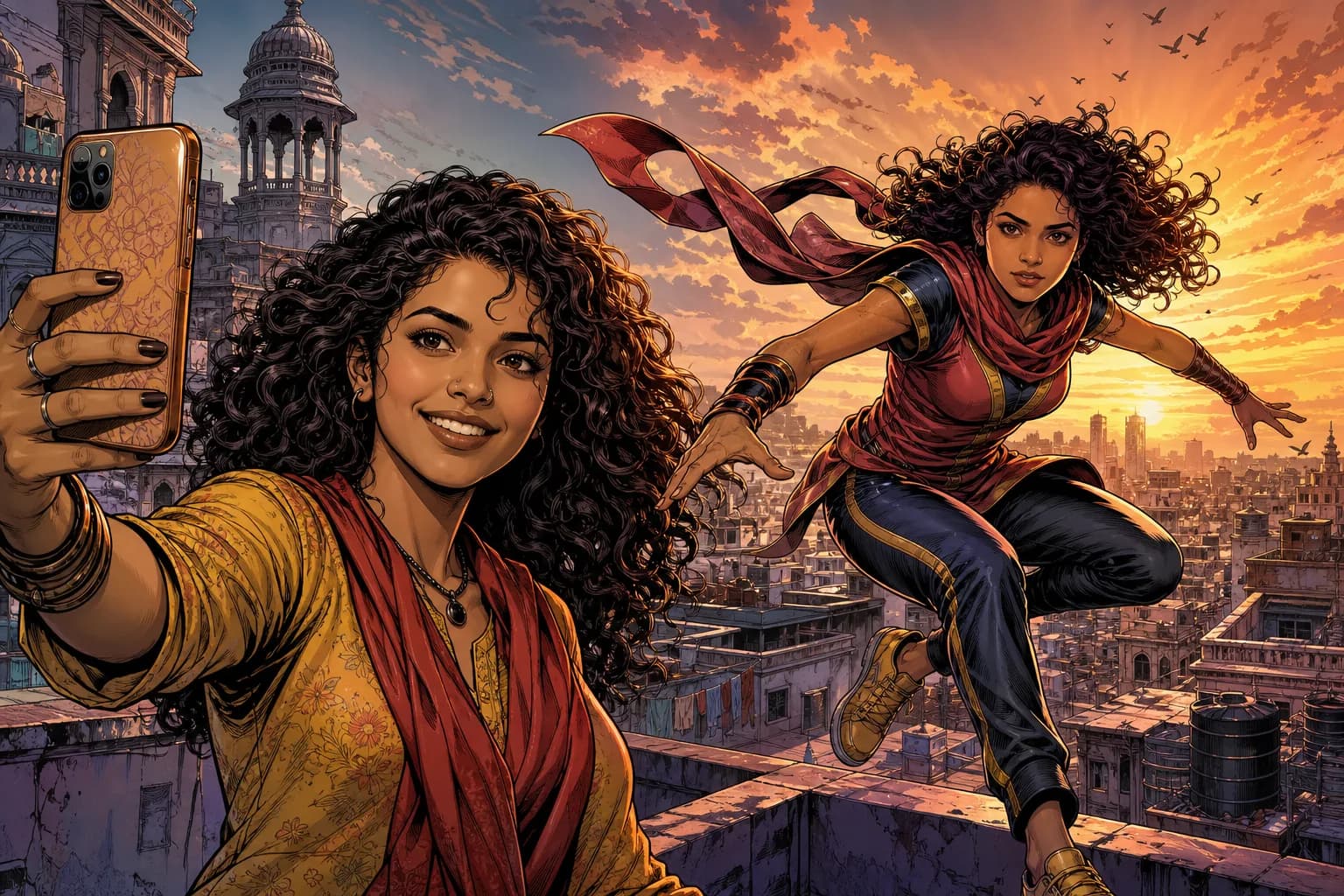
The whole point of a comic about you is that it's you. Friends should open page one and say "that's definitely him". Here's how turning a photo into a comic character works, what kind of photos help, and the mistakes that make people look like strangers.
Likeness isn't realism
A comic character isn't a traced photo. In a manga, everyone gets the same big expressive eyes; in a Euro Comedy album, everyone gets a big nose. If your character were drawn photo-realistically while everyone else was stylised, it would look pasted in.
So a good comic likeness keeps what makes you recognisable and lets the style handle the rest:
- Face shape, skin tone, hairline and hairstyle.
- Distinctive markers: glasses, a beard, a turban, a bindi, a scar, a gap-toothed smile.
- Build and posture.
Clothes are different. They change with the scene: school uniform in one chapter, a wedding sherwani in another. That's why we keep a person's identity separate from their outfit.
What makes a good reference photo
You don't need a professional shoot. One to four clear photos per person is plenty. The best ones are:
- Well lit, face clearly visible. Daylight near a window beats a dark restaurant.
- Looking roughly at the camera, plus one at a slight angle if you have it. A three-quarter view tells the artist about your nose and jaw.
- Recent, unless the comic needs an earlier age.
- Without sunglasses, masks or heavy filters. Beauty filters change face shape, and the comic will faithfully copy the filter.
- Just you, or clearly say which person you are in a group photo.
Avoid tiny faces in a crowd, extreme angles, motion blur and screenshots of screenshots.
On Comic World every photo is checked before anything is drawn. Each one comes back as good, needs another photo or unusable, with a plain explanation, like "your face is in shadow" or "this one has a filter", so you can swap it.
From photo to design sheet
Comic studios keep a character design sheet for every main character: a full-body view and a portrait, drawn in the comic's style, so every artist draws the same person. We do the same.
- You upload photos (or describe someone, if you'd rather not use photos).
- We draw a design sheet in your chosen style.
- You approve it, or ask for changes ("hair is shorter", "add the glasses"). You can try up to six versions per person.
- Once approved, the sheet goes along with every single panel that person appears in. That's how the face on page nine still matches page one.
Showing someone at different ages
Plenty of good stories span years: school sweethearts, a parent's life, a founder's journey. A comic has to show the same person at 8, 18 and 48, and it must look like the same person.
What should change with age: height, body proportions (children have larger heads and shorter limbs), facial maturity, the hairstyle of the time, facial hair, glasses, and of course clothes.
What should stay: face structure, skin tone and the markers that make someone themselves.
When your story covers years, we work out the chapters automatically ("college", "early career", "now") and show each person "through the years", with a design for every age the story needs. You approve each one.
Why characters drift, and how we stop it
If you've tried making comics with AI tools, you've seen it: the hero has a beard in panel one and not in panel three, a turban becomes a cap, a white car turns yellow. We learned this the hard way on an early test comic, where 14 of 41 pictures had continuity mistakes.
So every panel on Comic World goes through three things:
- References every time. The approved design sheets of everyone in the panel, plus the previous panel, go in as reference pictures.
- A continuity plan. Before drawing, we track who is in each panel, at what age, wearing what, sitting where, and which way the action moves.
- A check before you see it. Every picture is inspected against that plan. If someone doesn't match their design, it's redrawn before it reaches your comic.
Quick checklist
- One to four clear, recent photos per main person.
- No filters, no sunglasses, face in good light.
- An older photo if the comic shows someone younger.
- Describe what makes them them: "always wears a kurta", "never without her red specs".
- Approve the design sheet carefully. Everything else is built on it.
Ready to see yourself drawn in? Start your comic, or browse comics made from real stories.