Styles · Guides
Comic art styles explained: 14 looks and the stories they suit
Manga, pop art, noir, clear line, watercolour, vintage Indian comics and more. What each comic art style looks like, how it tells a story, and which real-life stories it suits best.
By the Comic World Studio · · 3 min read
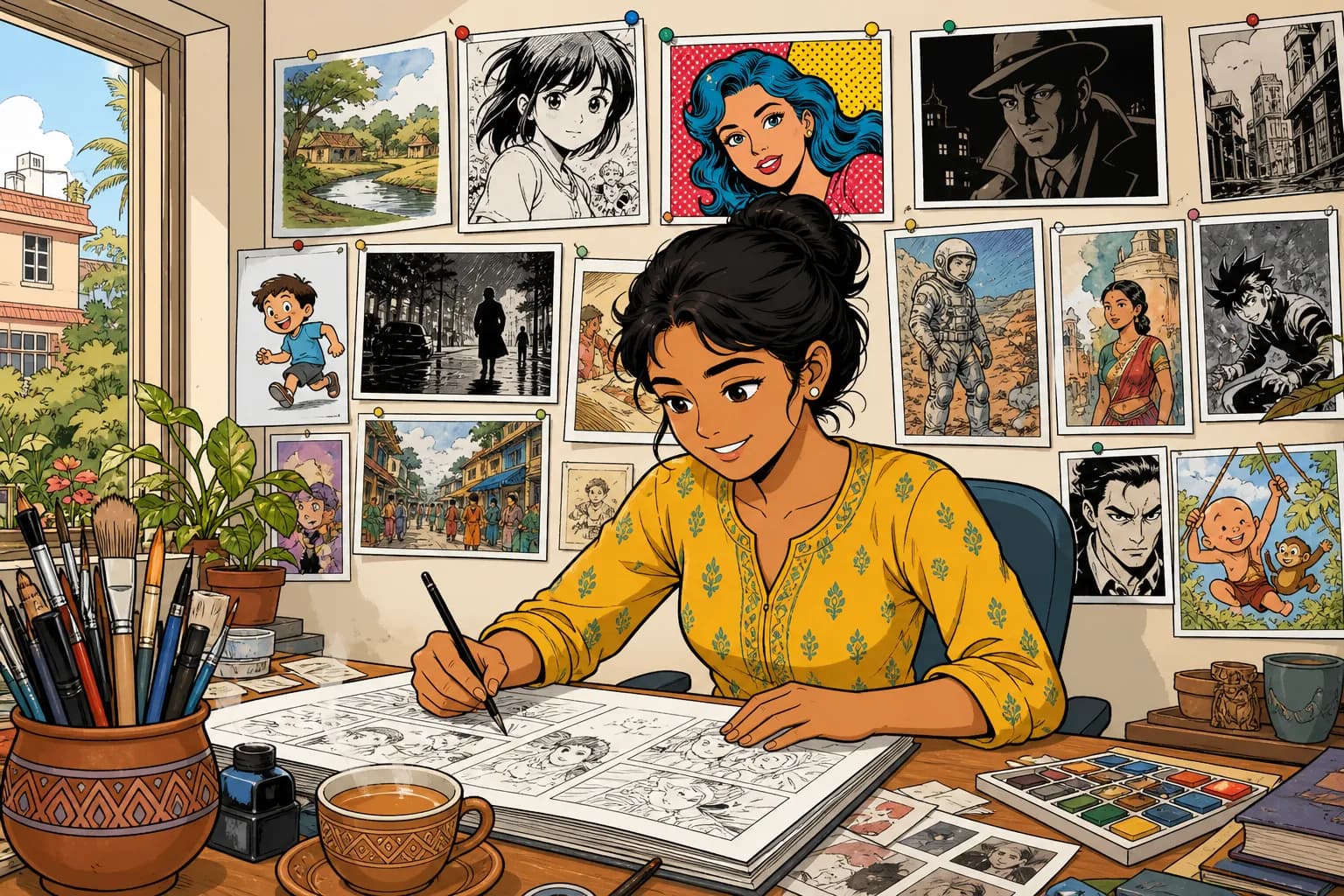
The same story can be a tearjerker, a thriller or a slapstick romp, depending on how it's drawn. Comic art styles aren't just decoration: each one has its own way of framing scenes, pacing pages and writing dialogue.
Here are the 14 styles you can choose on Comic World, what defines each one, and the stories each suits.
The five signature styles
These five have the most distinct visual grammar: they don't just look different, they tell the story differently.
Prestige
Looks like: a modern blockbuster superhero comic. Dramatic lighting, dynamic camera angles, rich colour and polished rendering.
Tells it like: an epic. Low heroic angles, big reveals, splash pages for turning points.
Great for: founder stories, sports wins, career milestones, anyone who deserves a hero moment.
Chaos
Looks like: absurd sci-fi comedy. Weird, wild, crowded with visual gags.
Tells it like: everything is slightly unhinged, and that's the joke. Restraint is not on the menu.
Great for: friend-group legends, disastrous trips, office folklore.
Pop
Looks like: classic pop art. Ben-Day dots, starbursts, bold primary colours and BIG sound effects.
Tells it like: punchy and loud, with short balloons and big beats.
Great for: birthdays, celebrations, anything that should feel like a party.
Ink
Looks like: elegant hand-drawn line art, with confident brushwork and restrained colour.
Tells it like: quiet and observant. Fewer words, more space.
Great for: personal milestones, reflective stories, gifts for people with good taste.
Manga
Looks like: black and white with screentones, expressive eyes and speed lines.
Tells it like: emotional rhythm. Long pauses, close-ups on feelings, dramatic reaction shots.
Great for: love stories, rivalries, coming-of-age, exam-season drama.
The classic styles
Clear Line
Looks like: the classic European adventure album. Clean, even outlines, flat colour, detailed backgrounds.
Great for: travel stories and adventures. If your trip had a map, this is your style.
Bold Graphic
Looks like: design-led comics. Flat shapes, big blacks, a limited palette.
Great for: stylish, modern stories: a car-mad friend, a city night out, a brand's origin story.
Euro Comedy
Looks like: big noses, big crowds, big laughs, in the spirit of classic European humour albums.
Great for: weddings, family gatherings, anything with too many relatives.
Sunday Strip
Looks like: warm, retro newspaper funnies.
Great for: retirements, parents' stories and everyday family humour.
Modern Cartoon
Looks like: bright and friendly, like an animated film.
Great for: kids' stories, new-baby books, pets and anything wholesome.
Graphic Novel
Looks like: painterly and grounded, with a literary feel.
Great for: life stories, family history, serious milestones and stories with real weight.
Noir
Looks like: moody shadows, high contrast and rain-slicked streets.
Great for: mysteries, rivalries, and funny stories told with a completely straight face. ("The case of the missing samosa" works surprisingly well.)
Watercolour Storybook
Looks like: soft washes, gentle colour and a dreamy storybook feel.
Great for: love stories, anniversaries, wedding gifts and grandparents' stories.
Desi Classic
Looks like: vintage Indian illustrated comics, the kind many of us grew up reading: bold outlines, warm print colours and a nostalgic feel.
Great for: family history, grandparents' journeys, festival stories and anything that should feel like a classic from childhood. For a worked example, see our Diwali gift ideas for family.
How to choose
Three questions usually settle it:
- How should the reader feel at the end? Moved: Watercolour, Graphic Novel or Ink. Laughing: Euro Comedy, Chaos or Sunday Strip. Pumped: Prestige or Pop.
- Who is it for? Kids like Modern Cartoon. Grandparents love Desi Classic and Sunday Strip. Your friends will appreciate Chaos.
- How much action is there? Car chases, matches and stunts suit Prestige, Bold Graphic and Manga. Quiet stories suit Ink and Watercolour.
Why style changes the story, not just the look
On Comic World, the style is chosen before the storyboard is written, on purpose. Each style comes with its own direction: how scenes are framed, how many panels a page holds, how much dialogue there is and how the cover is designed. A Manga version of your story will linger on reactions; an Ink version will cut half the words; a Pop version will add a sound effect or two. Characters are drawn in the chosen style too, so everyone belongs to the same world.
Not sure yet? Browse the Explore wall to see real stories in different styles, or start your comic and pick when you get there. For gift ideas by occasion, see personalised comic book gifts.